TRUSTED Coffee Machine Repairs in Brisbane
Coffee Machine Repairs Brisbane.
From home espresso machines to commercial coffee equipment, our workshop repairs help Brisbane customers enjoy consistently great coffee again.

Professional Coffee Machine Repairs in Brisbane for Homes and Businesses
Whether it is your morning coffee at home or the first extraction pulled in a busy café, a reliable machine quickly becomes part of the daily routine. When it starts leaking, loses pressure, or refuses to turn on, it disrupts more than just your morning.
Brisbane’s café culture puts coffee machines under a different kind of pressure. From high-volume commercial machines running back-to-back extractions in Fortitude Valley and West End to home espresso setups in Carindale and Paddington, the faults we see reflect how hard these machines actually work. Mineral buildup, worn seals, pump issues, and blocked brew heads develop gradually and are almost always repairable when caught early.
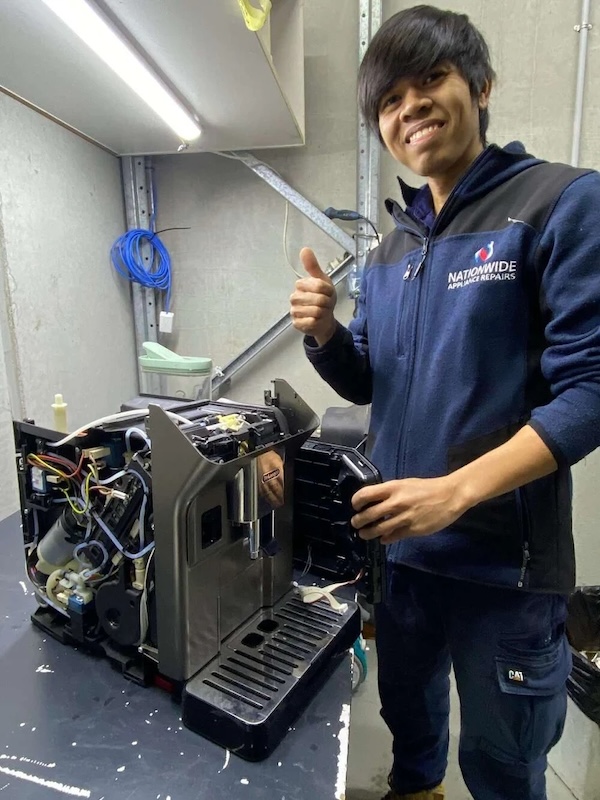
Since 2009, Quality Appliance Repairs has been repairing coffee machines for Brisbane households, cafés, restaurants, and hospitality venues. All repairs go through our dedicated workshop, where every machine is properly diagnosed, repaired, and tested before it comes back to you.
Common coffee machine faults we repair include:
- Machine not powering on or failing mid-cycle
- Water leaking internally or from the base
- Weak extraction or inconsistent brewing pressure
- Steam wand blocked or losing pressure
- Grinder not operating correctly
- Error codes appearing on the display
If your coffee machine is showing any of these signs, early diagnosis can often prevent additional damage and help extend the lifespan of the machine. Our Retail Support Team is available six days a week to help arrange an inspection and discuss the most practical repair options for your machine.
Types Of Coffee Machines We Regularly Repair
Common Coffee Machine Faults We Are Finding Across Brisbane in 2026
Brisbane’s café culture and busy households mean coffee machines work hard every day. Here is what our workshop technicians are seeing regularly in 2026.
A Miele CM6150 was brought in with an intermittent fault — coffee was dispensing into the drip tray rather than through the spout. The technician identified a faulty drainage valve as the cause, replaced it, and tested the machine through multiple cycles before confirming the fault was resolved.
A machine that occasionally misdirects coffee is easy to dismiss as a one-off. In most cases it points to a specific internal component starting to fail, and catching it early keeps the repair straightforward.
A Breville BES990 was brought in with no power when the button was pressed. The technician replaced the board and probe as approved, and during the repair also found a damaged inner screen shower head that was replaced from workshop stock. The machine was tested fully before being returned.
A coffee machine that will not turn on is not always a board fault. Opening the unit properly during diagnosis means related issues are caught and resolved in the same visit rather than coming back as a separate job.
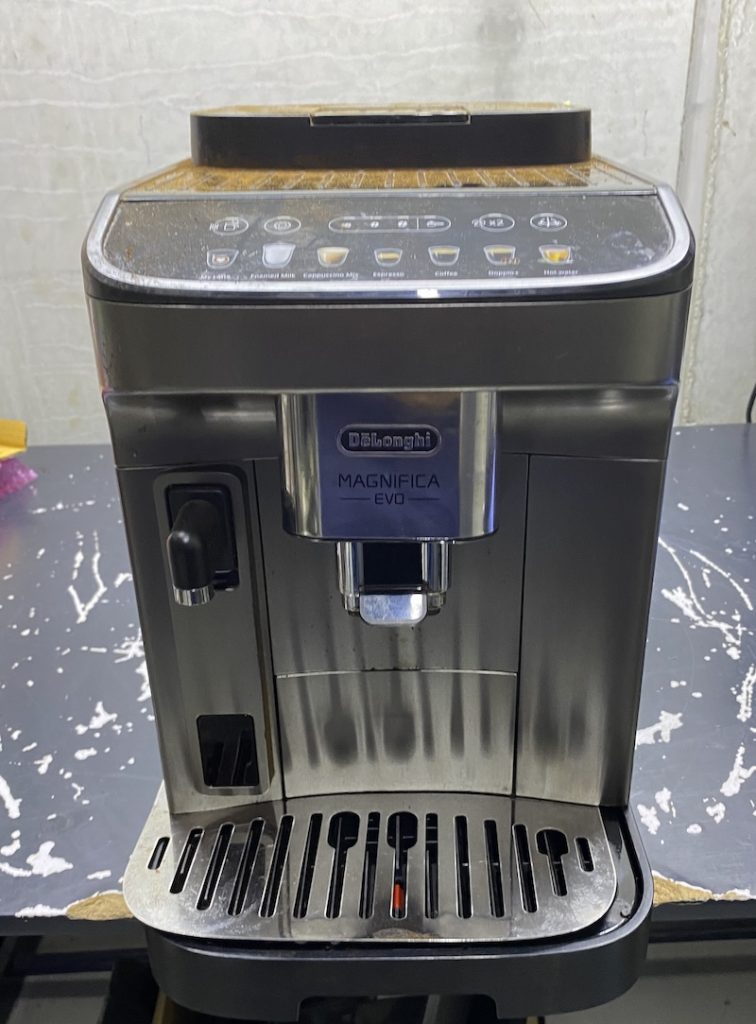
A DeLonghi ECAM65055MS was not pumping milk. The faulty milk carafe was replaced and the unit was fully serviced before testing confirmed everything working correctly.
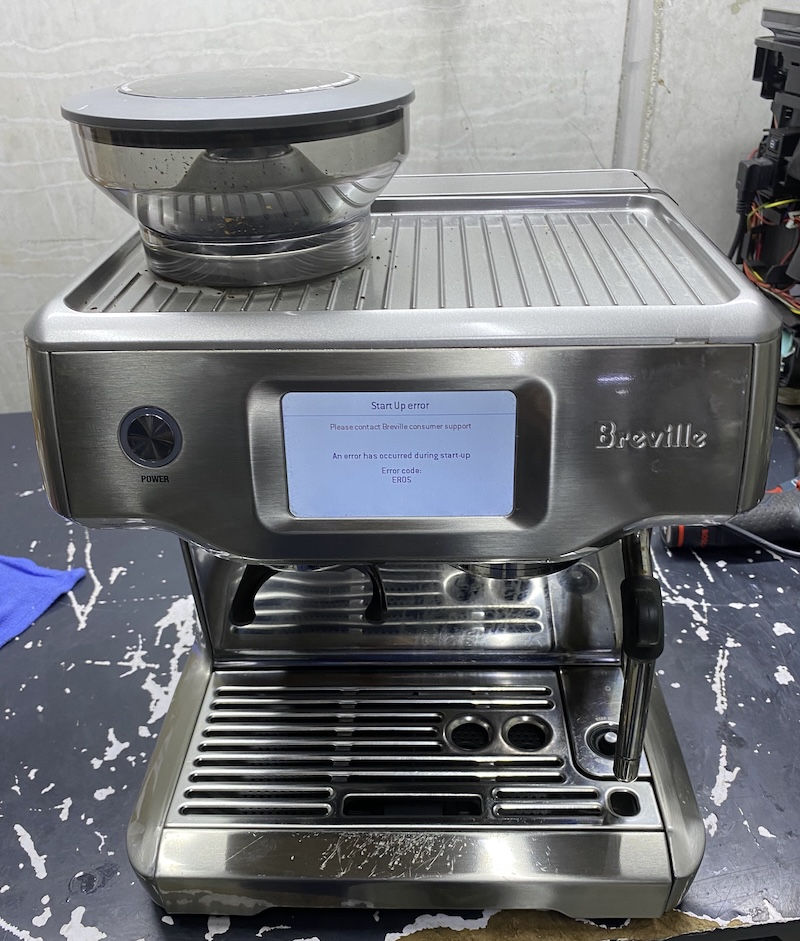
A Breville BES880 was showing a persistent error code ER05. On inspection the milk jug sensor was found to be faulty and identified for replacement.
Milk system faults are one of the more common calls we see on domestic machines. They often present as error codes rather than an obvious mechanical failure, and getting the right component identified on inspection avoids unnecessary guesswork.
Regular descaling also plays an important role in preventing milk system and heating-related faults caused by mineral buildup. If you’re unsure how to descale your machine correctly, read our guide on How to Descale Your Coffee Machine: A Step-by-Step Guide before scale begins affecting performance.
A Breville BES990BTR had water pooling continuously in the tray underneath the unit. The technician replaced the water level probes and seal set, tested the machine, and confirmed no further leaking after the repair.
A separate Breville BES980 had a loud noise from the steam wand and hot water that would not pump. On inspection the technician found pressure leaking from the water level probes and NTC O-ring seal, with replacement parts identified for the return visit.
Internal leaks on espresso machines often start small and are easy to ignore. Left running, the pressure loss affects brewing quality and puts additional strain on the pump over time.
Commercial coffee machines running through a full café service in Fortitude Valley or West End are under a completely different level of demand than a home machine. Pumps cycle more frequently, heating systems run harder, and milk system components wear faster under back to back extractions. The faults we see on commercial equipment tend to involve pressure loss, inconsistent temperature across the group heads, and milk system failures that develop gradually under sustained load.
Our workshop handles commercial equipment the same way it handles domestic machines. Every unit is properly diagnosed, repaired, and tested across its full range of functions before it goes back into service. For Brisbane businesses where downtime costs money, speak to our Retail Support Team directly about priority turnaround.
Should You Repair or Replace Your Coffee Machine in Brisbane?
Most coffee machine faults come down to a single component. Here is a straightforward guide based on what our Brisbane workshop is seeing regularly in 2026.
| Appliance Fault | Age | Repair or Replace | Adjusted Lifespan | Reason |
| Drainage valve fault causing coffee to divert into drip tray | 2–6 yrs | REPAIR | +3–4 years | A single valve replacement resolves the fault completely. One of the more straightforward repairs we carry out in the workshop. |
| Machine not turning on, board and probe replacement required | 3–7 yrs | REPAIR | +4–5 years | A board replacement on a quality machine is almost always worth doing. During the same visit, related components like the shower screen can be checked and resolved without an additional call. |
| Milk system fault or faulty milk carafe | 2–5 yrs | REPAIR | +3 years | Milk system components are replaceable. A machine that cannot pump milk or shows a milk sensor error does not need to be replaced, it needs the right part identified and fitted. |
| Water pooling in drip tray, probes and seal set worn | 2–6 yrs | REPAIR | +3–4 years | Internal leaks on espresso machines are almost always a seal or probe fault rather than a structural issue. A single workshop visit with the right parts resolves it completely. |
| Extraction stopping after a few seconds, group head blocked | Any age | REPAIR | +3 years | Short extraction is almost always a blockage rather than a pump fault. A full service rather than a parts replacement is often all that is needed. |
| Brew unit failure causing water to divert to capsule tray | 3-7 yrs | REPAIR | +3–4 years | A faulty brew unit is a contained component replacement. On a quality machine it is almost always more practical to replace the unit than to replace the whole machine. |
Not sure whether your machine is worth fixing? Bring it in or give us a call Monday to Saturday. We will inspect it, give you a clear answer, and let you make the call from there.
Coffee Machine Maintenance Tips for Brisbane Homes and Businesses
Brisbane’s humidity and warm climate create maintenance priorities that are different from other cities. These habits come directly from what our technicians are finding in the workshop across Brisbane in 2026.
Clean the Brew Unit Regularly
Remove and rinse the brew unit every few days rather than waiting for a weekly clean. Coffee oils harden faster in Brisbane’s warmth and are one of the most common causes of blocked output and short extraction our workshop sees. The Breville BES878 job we attended is a good example — a full group head service rather than a parts replacement was all it needed.
Wipe the Steam Wand Immediately After Every Use
Milk residue dries within minutes in Brisbane’s heat and restricts steam flow faster than most people expect. A quick purge and wipe after every session prevents a blockage that eventually requires a workshop visit to clear properly.
Check the Drip Tray Before It Overflows
Empty and clean the drip tray every few days rather than waiting for the indicator. An overflowing tray pushes water into the base of the machine and causes internal damage that is not always immediately visible. Several of the water pooling jobs we see in the workshop start here.
Rinse the Milk System After Every Use
Brisbane’s humidity means milk residue left inside carafe components and tubing breaks down faster than in cooler climates. Running a rinse cycle after every use is one of the simplest ways to avoid a milk system fault developing over time.
Book an Annual Workshop Service
A machine used daily needs a proper workshop service at least once a year regardless of whether a fault is present. Most of the performance issues our technicians see trace back to buildup and wear that has been developing quietly for twelve months or more. Catching it early keeps the repair straightforward and the coffee consistent.
Use Filtered Water Where Possible
Brisbane’s water quality varies across suburbs and mineral deposits still accumulate inside boilers and valves over time. A basic inline filter reduces how quickly scale builds up and extends the interval between descaling cycles.
Small Appliances and Brands We Repair in Brisbane












How Our Workshop Repair Service Works

Book or Call
Contact us to discuss the issue and arrange a convenient time.

Drop Off
Bring your appliance to our workshop for professional assessment.

Diagnosis
Our technicians thoroughly inspect the appliance to identify the fault.

Clear Quote
Receive a transparent quote and approve the repair before any work begins.

Repair & Warranty
We complete the repair and provide warranty coverage for parts and labour.


“Josh was amazing! Very friendly and efficient and
worked his magic to fix a tricky issue with my
microwave.”
– Happy Customer

“Henry was amazing! Very friendly and efficient and
worked his magic to fix a tricky issue with my
microwave.”
– Happy Customer

Frequently Asked Questions
In most cases yes. The majority of faults we see in our Brisbane workshop come down to a single component, a valve, a pump, a sensor, or a seal. Around 90% of the machines that come through leave repaired. The ones that do not are usually older units where multiple systems have failed or where the cost of parts makes repair uneconomical. We will tell you honestly which category yours falls into after the assessment, and nothing gets repaired without your approval first.
Water leaks on coffee machines rarely come from where they appear to be. The pooling you see in the drip tray or on the bench is almost always originating from somewhere further inside the unit, a worn seal, a probe, a valve connector, or an internal hose under pressure. We see this regularly in the workshop. The only way to find the actual source is to open the machine and trace it properly rather than replacing parts based on where the water ends up.
Short extraction is one of the more common faults we see and it is almost never a pump failure. In most cases it comes down to a blockage in the group head or shower screen restricting flow and causing the machine to cut the cycle early. A full internal service rather than a parts replacement is often all that is needed. If you are getting five to ten seconds of extraction before it stops, bring it in before the restriction puts additional strain on the pump.
Error codes point to something specific rather than a whole system failure. A Breville came in showing a persistent ER05 error and on inspection it traced back to a faulty milk jug sensor. A Saeco kept showing a descale prompt even after the cycle had been completed, which pointed to an internal fault rather than a descaling issue. In most cases an error code is the machine telling you exactly where the problem is. Bring it in and we will trace the cause properly.
Yes. We service everything from compact home espresso machines to high-volume commercial equipment used in Brisbane’s cafés, restaurants, and hospitality venues. Commercial machines running back to back extractions are under a completely different level of demand than a home machine, and our workshop diagnostic process accounts for that. Nothing leaves until it has been tested properly across its full range of functions. If you are a business with multiple machines or ongoing service needs, speak to our Retail Support Team directly.
Meet Our Brisbane-based Technicians
Dan
SENIOR TECHNICIAN
Specialist in espresso machines and complex electronic diagnostics.
Workshop Technician
APPLIANCE REPAIR SPECIALIST
Expert in coffee machines, vacuums, microwaves, fridges, and general benchtop appliances.
Retail Support Team
WORKSHOP BOOKING SUPPORT
Ensures every repair meets our strict quality standards.
Ready to fix your appliance?
Don’t risk a DIY job or expensive replacement. Most appliances can be fixed for a fraction of the cost of a new one.

CALL NOW
(07) 3088 9002

AVAILABLE
Mon–Fri: 8:30 AM – 7:00 PM
Sat: 8:30 AM – 4:30 PM
24 hours booking